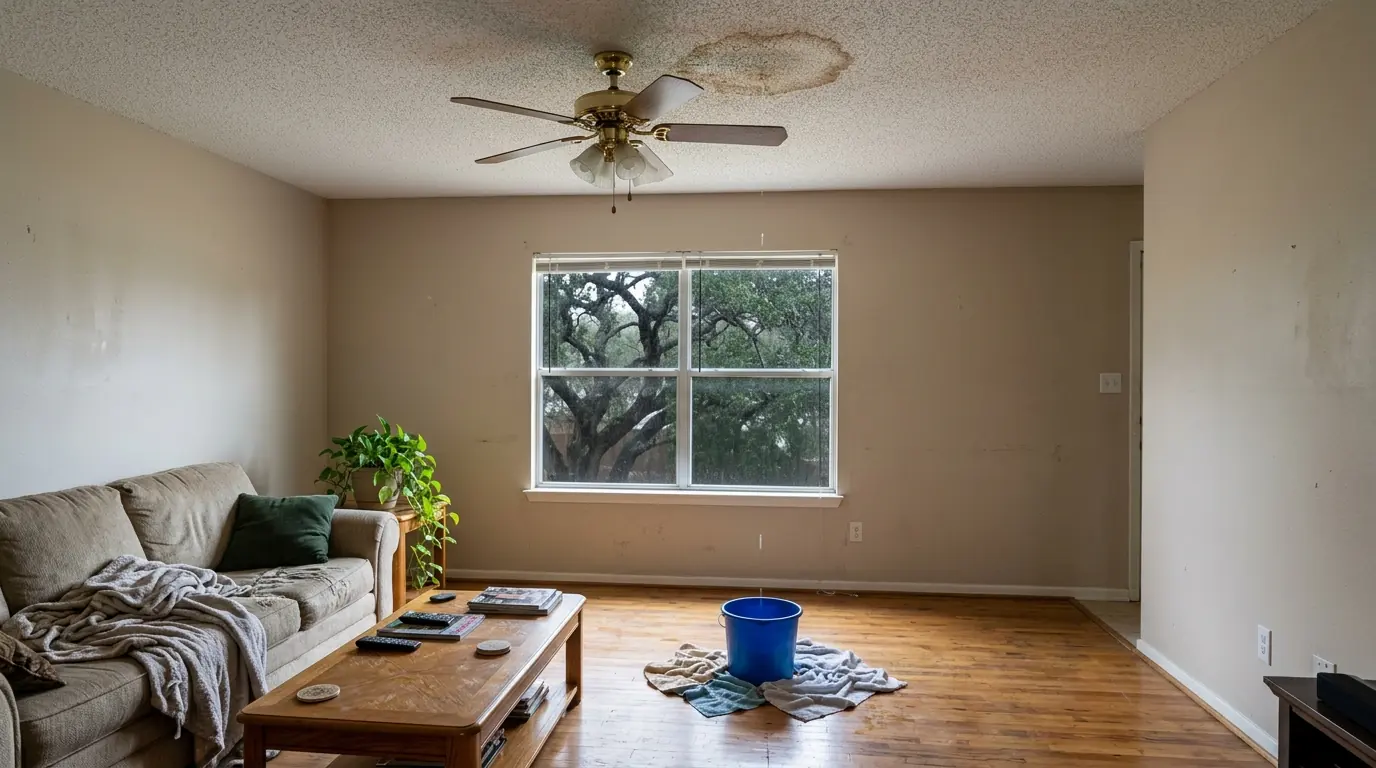
It's raining hard and water is dripping from the ceiling. Nobody can fix the roof properly until the storm passes, but what you do in the next hour decides how much damage the house takes. Here's what to do, in order.
1. Protect the inside first
Move furniture, electronics and rugs out of the way, put a bucket or storage tote under the drip, and lay towels around it to catch the splashes.
If the ceiling is bulging or sagging, water is pooling above it. Keep everyone out from under it, set a bucket underneath, and poke a small hole in the center of the bulge with a screwdriver. The water drains in one spot instead of bringing the drywall down.
If water is near a light fixture, an outlet or the electrical panel, switch off the breaker for that part of the house.
2. Stay off the roof
A wet roof is slick, and Central Texas storms often bring lightning and strong wind with the rain. Sealant and patches won't stick to wet shingles anyway, so anything done up there now won't hold.
- Don't climb up in the rain or in the dark.
- Don't caulk or tar a wet roof. It won't seal.
- Don't assume it's fixed when the dripping stops. It will come back with the next storm.
3. Write down what you see
Take photos and video of the drip, the stain and anything that got wet, and note the time and how hard it was raining. If hail or wind caused the damage, those photos help if you file an insurance claim. Texas law says you pay your own deductible, so be wary of any contractor who offers to cover or waive it.
4. Once the rain stops
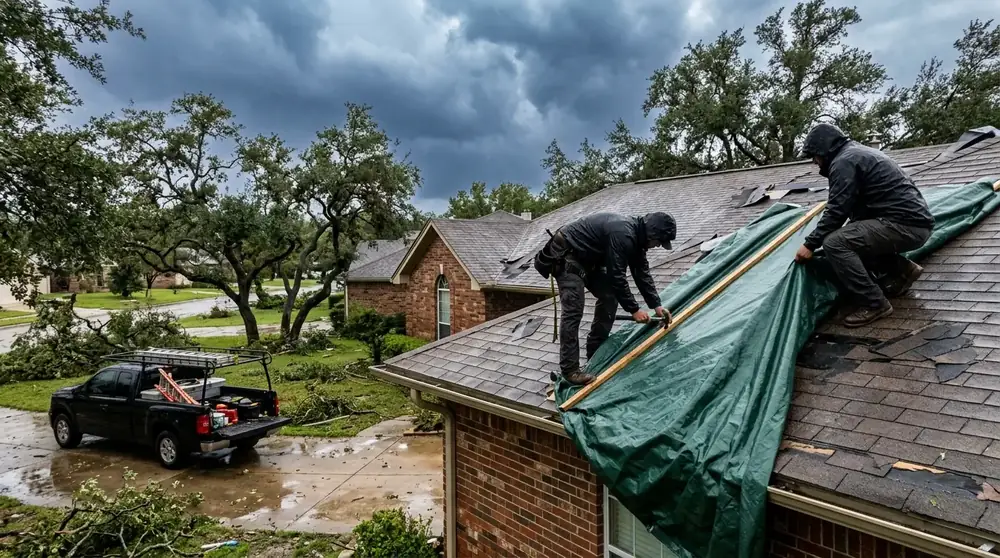
The first job is keeping more water out, usually with a tarp over the damaged area until the permanent repair. Then the leak has to be traced to where it actually gets in. Water runs along the rafters and decking before it drips, so the hole is often several feet from the stain. Fixing the spot above the stain is how leaks come back.
That's the part we do. We start in the attic, follow the water to the roof, show you photos of what failed, and give you the price before any work starts.